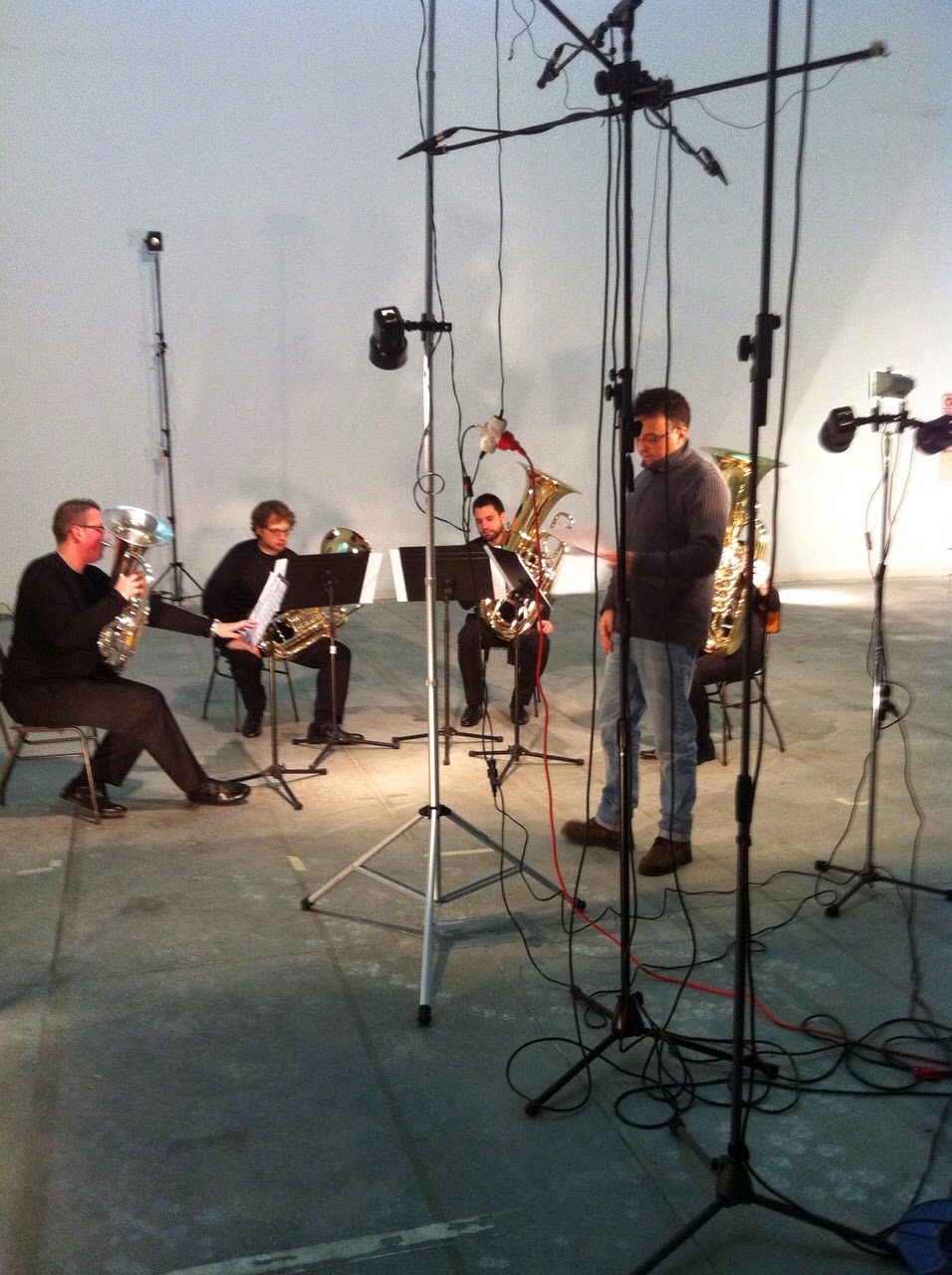
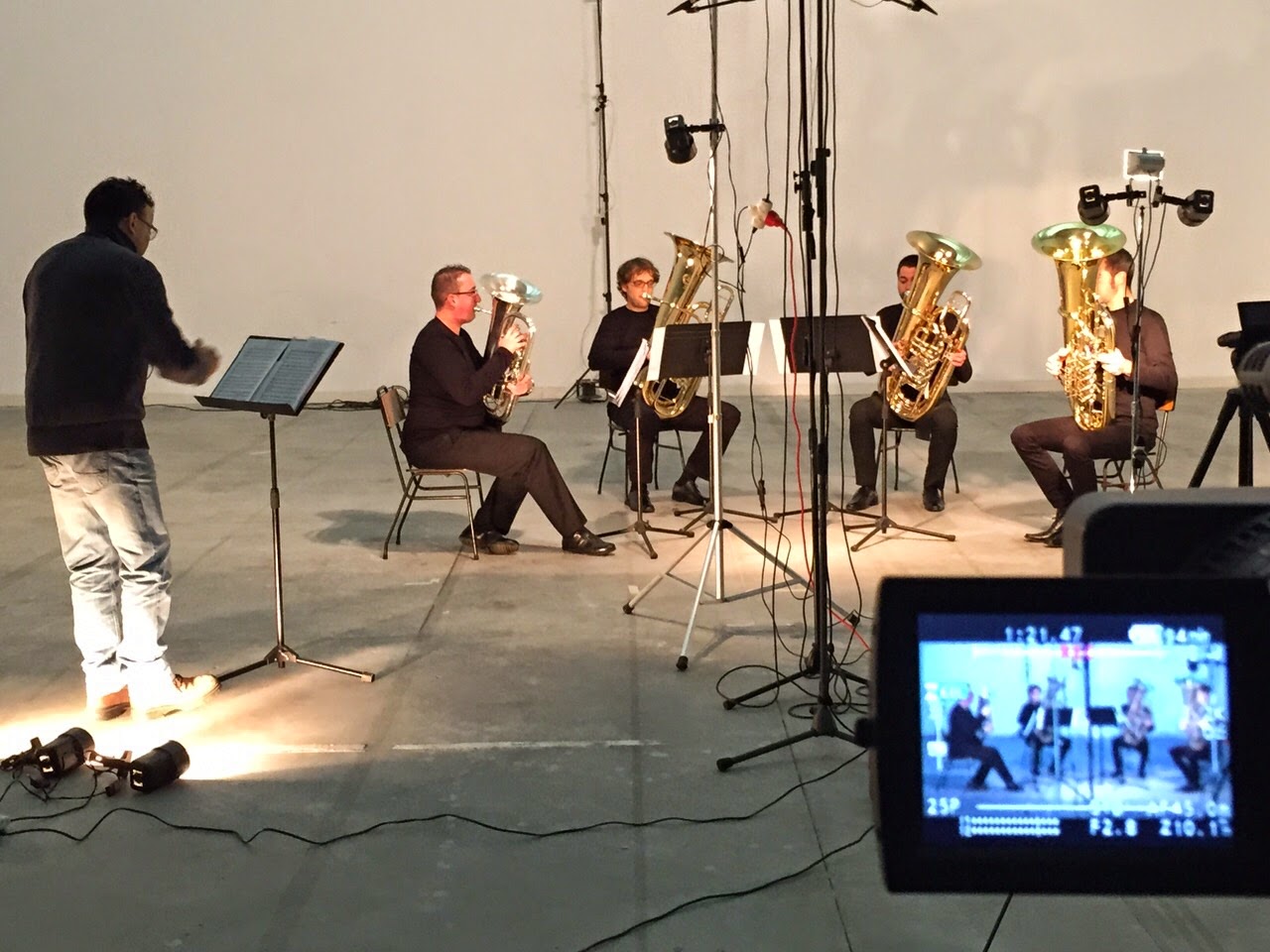
Escrita para bombardino y electroacústica pregrabada y en vivo, esta obra fue estrenada por Rubén Costa Paz acompañado por Jorge Carrillo como sonista en el marco de las actividades celebradas durante los EME 2015. En palabras del propio autor, "Queen Mary’s Death es una precuela de la
célebre obra de Henry Purcell que pretende ser una aproximación poética al
topos del memento mori a partir de la tragedia de una mujer que en la flor de
su juventud se enfrenta a la muerte".
Aquí tenéis la versión de estudio grabada por Rubén Costa Paz y Jorge Carrillo Fernández a finales del curso pasado.
Written by Henry Purcell (1659-1695) originally for soprano, alto, tenor, and bass, four trumpets, and organ, was performed at the funeral of Mary II of England and parts of it sounded at the funeral of the composer himself. The version that you can listen here is adapted for tuba ensemble and percussion, trying to preserve to the maximum the extraordinary beauty of the music written by Henry Purcell.
Enjoy it...
Mary II- Portarit by Godfrey Kneller. 1690.
James II's coronation.
The Coronation Procession of King James II and Queen Mary of Modena (c.1685)
Henry Purcell by John Closterman (ca. 1695)
Headphones recomended!!
Keep in Touch Tuba Project
Music for the Funeral of Queen Mary (1695)
Henry Purcell/Arranged by Alfonso Mollá
Castells
Euphonium:
Rubén Costa Paz, Pablo Dopazo
Gondar, David Lavía Pintos, Eduardo Diz Sestelo, Francisco Villamor Regueiro,
Félix Iago Rodríguez Ramos, Luis Busto Callejo, Ricardo Filgueira Fernández,
Esteban Manuel Fernández García.
Tuba:
Hugo Portas Ricoy, Rafael de la
Torre López, Danielius Patrikas Kisunas, Iván Fernández Alende, David Muñoz
Velázquez, Néstor Martínez Jara, Cesar Peña Valencia, Rubén Carro Campelo,
Ismael Cenador Villar, Francisco Javier Lavía Fontán, Pablo Doval Golmar, Pablo
Emilio Santaclara Ríos, Sergi Vanyó Peidro, Abel Fernández Seijas, Manuel León
Martín, Nicolás Portas Ricoy, Alfredo López Castro, Guillermo Collazo
Cortegoso, Alfredo Viceiro Fernández, Ramón Doce Castelao, Noelia Graciá Ribes,
Jesús Manuel Curros Álvarez, Manuel Martínez Villar, Noelia González Rigo,
Nuria Inguanzo Lorenzo,
Percussion:
María Cuadriello Díaz, Vanesa
Menéndez Alonso.
Conductor:
Alfonso Mollá Castells
Organized by:
YoTuba
Coordinated by:
Hugo Portas Ricoy, David Muñoz
Velázquez, Nicolás Portas Ricoy, Rubén Costa Paz.
In collaboration with:
Keep in Touch Tuba Project, Conservatorio
Superior de Música de Asturias (CONSMUPA), Conservatorio Profesional de Música
de Gijón, LABoral Centro de Arte y Creación Industrial
Coordination from LABoral Centro de
Arte y Creación Industrial:
Ana Isabel Menéndez
Sound:
René de Coupaud Villarubia
Directed by:
Miguel Ángel Fernández Gutiérrez.
Recorded on January 24, 2015 in La
Nave, Laboral Centro de Arte y Creación Industrial, Gijón, Asturias (Spain).
Del 4 al 12 de julio del presente año, tendremos la oportunidad de trabajar en sesiones que alternarán el trabajo técnico colectivo con las clases individuales. El curso ofrece también la posibilidad de ensayar con pianista acompañante y participar en las diferentes agrupaciones.
Si estáis interesados podéis consultar todos los detalles de la matricula aquí.
Muchas gracias a la organización del XXII Curso de Música de Astorga por invitarme a participar en un proyecto tan bonito.
Ya se han convocado las pruebas de acceso al CONSMUPA. Si estáis interesados en presentaros pinchad aquí para acceder a la información completa publicada en el BOPA. El plazo de inscripción es del 20 de mayo al 12 de junio (ambos inclusive) y las pruebas específicas se realizarán a partir del 22 de Junio.
Podéis conocer la oferta educativa del CONSMUPA en la especialidad de Interpretación pinchando aquí, y en la especialidad de Pedagogía pinchando aquí.
En nuestra página de facebook encontraréis numerosas grabaciones e información acerca de las actividades que se desarrollan en el Aula de Tuba del CONSMUPA.
Un saludo
Estructura de las pruebas de acceso en Interpretación y Pedagogía:
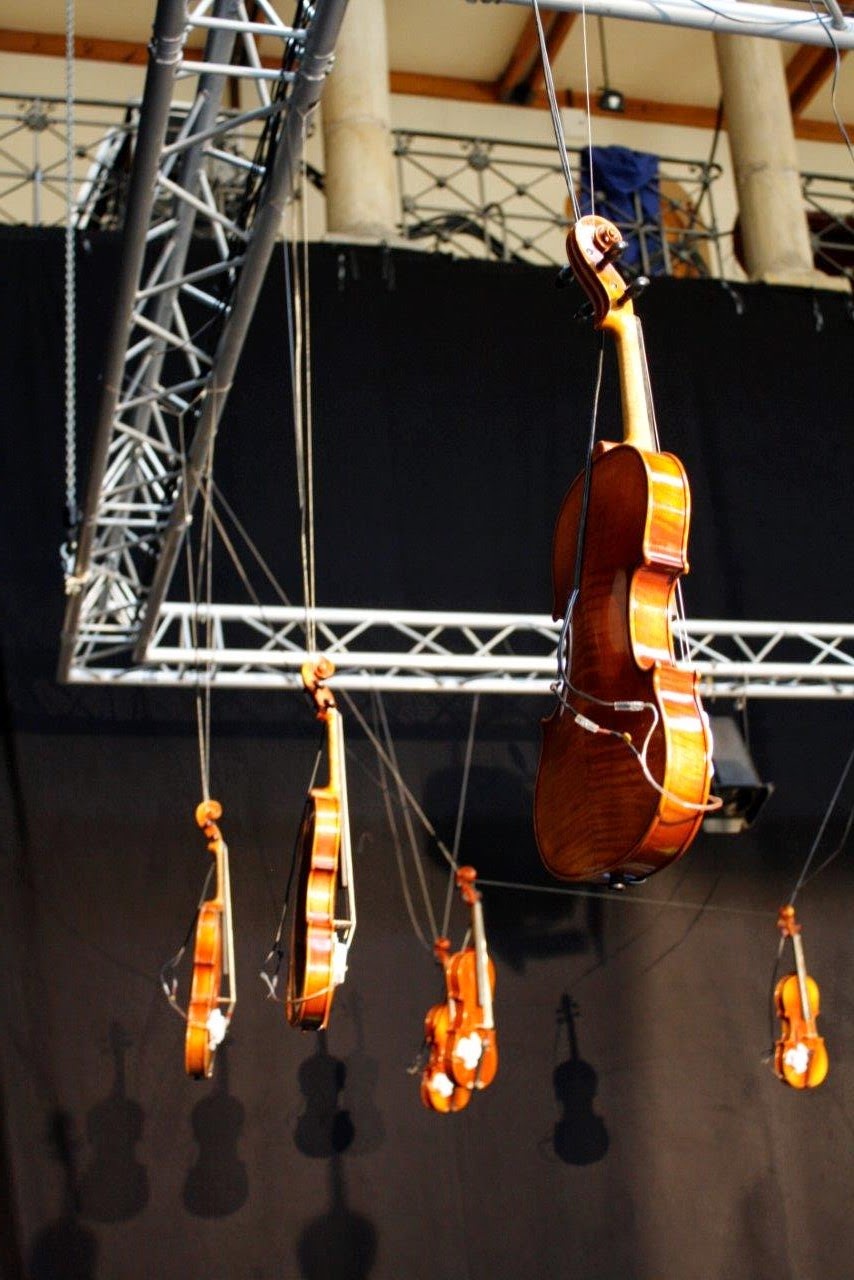
The concept of the expanded tubas was developed last year by Miguel Ángel Fernández. Miguel had been working in a very nice musical installation called Humanless Orchestra in which a chamber orchestra was reproducing a recorded piece, using the instruments as the own resonators... When I saw this project, I asked Miguel, that is in fact a wonderfull friend of mine, to do something similar with tubas... but instead of reproducing recorded music, we could play something together, a free improvisation with the aid of live electronics....
After several trials, modifying several things, the expanded tubas started to function as we wanted... we hope you enjoy the live recordings of this two versions of the same piece... a free improvisation called Turbo...
Thanks Miguel!!
Humanless Orchestra. Miguel Ángel Fernández, 2014.
It's always good to receive a visit from a professor
of tuba, a colleague who shares his experiences and his vision of the tuba with
the students of CONSMUPA. The Erasmus + program not only allows mobility for
the students, but provides an excellent vehicle for the exchange of educational
experiences through the teachers mobility. The CONSMUPA Tuba studio has already
been benefited by the visit of Gabriel Capet, from Lille (France) and soon,
from the 20th to 22 May 2015, we will enjoy the visit of Professor Alexandre
Cerdá Belda, from Conservatory G.
Martucci of Salerno (Italy). Classes are open, any tuba player who want to
come to the CONSMUPA to meet Alexandre Cerdá, will be welcome.
In this case it is a somewhat special visit as I know
Alex for many years, we have meet in numerous tuba courses where we developed a
great relationship. By then, we were young, full of enthusiasm and eager to
learn ... Alex's visit is a great opportunity to ensure that we continue full
of enthusiasm, and our desire to learn has grown ... being both still young…but
no so young.
Welcome Alex !!
ALEXANDRE CERDÁ BELDA
Born in Agullent (Valencia), got a Degree of Professor
of Tuba at the Conservatory of Music in Valencia in 1991. He has studied with
M. Navarro, H. Triebener, M. Culbertson, H. Philips, W. Hilgers, M. Lind. Upon
graduation he moved to Italy where he studied with R. Bobo and R. Tucci at the
Scuola di Musica di Fiesole. In 1992 participates in the JONDE, wins auditions
in the Youth Orchestra of the Mediterranean Countries and the National Youth
Orchestra of Italy (OGI) where he recorded the CD Balkans with V.Globokar and
including also the 5th Symphony of Gustav Mahler.
In 1993 he won the audition for the New Symphony
Orchestra di Milano G. Verdi, founded by Vladimir Delman, remining there as a
principal tuba player until 1996; being conducted, among others, by G. Noseda,
G. Prêtre and R. Muti.
He has also collaborated with the following
orchestras: Orchestra Sinfonica di Roma della RAI, Orchestra del Maggio
Musicale Fiorentino Orchestra Sinfonica della RAI di Milano, Orchestra
Sinfonica A. Toscanini, Haydn Orchestra Sinfonica di Trento e Bolzano,
Orchestra del Teatro Lirico di Cagliari, Orchestra the Teatro dell'Opera di
Roma, Bilbao Symphony Orchestra, Teatro alla Scala di Milano; acting under the
direction, among others: N. Santi, D. Oren, G. Kuhn, RF de Burgos, G. Bertini,
G. Sinopoli and L. Maazel. From 1996 to 2006 he collaborated with the Orchestra
of the Teatro San Carlo in Naples with which recorded Das Rheingold R. Wagner.
He has been Professor of Tuba at the Conservatory G. Verdi of Turin and S. Giacomantonio of Cosenza. Currently
teaches at the Conservatorio G. Martucci
of Salerno.
He has published with Santabarbara editions the method
for Tuba The Tuba della Tecnica I °
-Flessibilità- and a piece for Tuba and Piano called Dream.
Siempre es
positivo recibir la visita de un profesor de tuba, un colega que comparte sus
experiencias y su visión de la tuba con los alumnos del CONSMUPA. El programa
Erasmus+, no solo permite la movilidad del alumnado, sino que proporciona un
excelente vehículo para el intercambio de experiencias pedagógicas a través de
la movilidad del profesorado. El Aula de Tuba del CONSMUPA se ha visto
beneficiada por la visita de Gabriel Capet, procedente de Lille (Francia), y
próximamente, durante los días 20 al 22 de mayo de 2015, podremos disfrutar de
la visita del profesor Alexandre Cerdá Belda, procedente del Conservatorio G. Martucci de Salerno (Italia). Las
clases serán abiertas, cualquier tubista que desee acercarse al CONSMUPA para
conocer a Alexandre Cerdá, será bienvenido.
En este
caso se trata de una visita un tanto especial, ya que conozco a Alex desde hace
muchos años, coincidimos en numerosos cursos de tuba en los que entablamos una
estupenda relación. Éramos jóvenes, cargados de ilusión y con muchas ganas de
aprender… su visita es una magnífica oportunidad para comprobar que seguimos
cargados de ilusión, y nuestras ganas de aprender han crecido… aunque ya no
seamos tan jóvenes.
Bienvenido
Alex!!
ALEXANDRE CERDÁ BELDA
Nacido en
Agullent (Valencia) consigue el Título Superior de Profesor de Tuba en el
Conservatorio Superior de Música de Valencia en 1991. Ha estudiado con M.
Navarro, H. Triebener, M. Culbertson, H. Philips, W. Hilgers, M. Lind.
Terminados los estudios se traslada a
Italia donde realiza los cursos de perfeccionamiento con R. Bobo y R. Tucci en
la Scuola di Musica di Fiesole. En
1992 participa en la JONDE, gana las audiciones en la Orquesta Joven de los
Países Mediterráneos y en la Joven Orquesta Nacional de Italia (O.G.I) donde
graba el CD Balkans con V.Globokar y la 5° Sinfonía de Gustav Mahler.
En 1993
gana las audiciones en la nueva Orchestra Sinfónica di Milano G. Verdi, fundada por Vladimir Delman,
puesto que ha ocupado hasta 1996; siendo dirigido entre otros por G. Noseda, G.
Prêtre y R. Muti.
Ademàs ha
colaborado con las siguientes Orquestas: Orchestra Sinfonica della RAI di Roma, Orchestra del
Maggio Musicale Fiorentino, Orchestra Sinfonica della RAI di Milano, Orchestra Sinfonica
A. Toscanini, Orchestra Sinfonica
Haydn di Trento e Bolzano, Orchestra del Teatro Lirico di Cagliari, Orchestra
del Teatro dell’Opera di Roma, Orquesta Sinfónica de Bilbao, Teatro alla Scala
di Milano; actuando bajo la dirección, entre otros, de: N. Santi, D. Oren, G. Kuhn,
R. F. de Burgos, G. Bertini, G. Sinopoli y L. Maazel. Desde 1996 al 2006 ha
colaborado con la Orquesta del Teatro San Carlo de Nàpoles con la que ha
grabado Das Rheingold de R. Wagner.
Ha sido
Profesor de Tuba en los Conservatorios G.
Verdi de Turín y S. Giacomantonio
de Cosenza. Actualmente lo es en el Conservatorio G. Martucci de Salerno.
Ha
publicado con la editorial Santabarbara
el método para Tuba La Tecnica della Tuba
I° —Flessibilità― y la obra para Tuba y Piano Sueño.
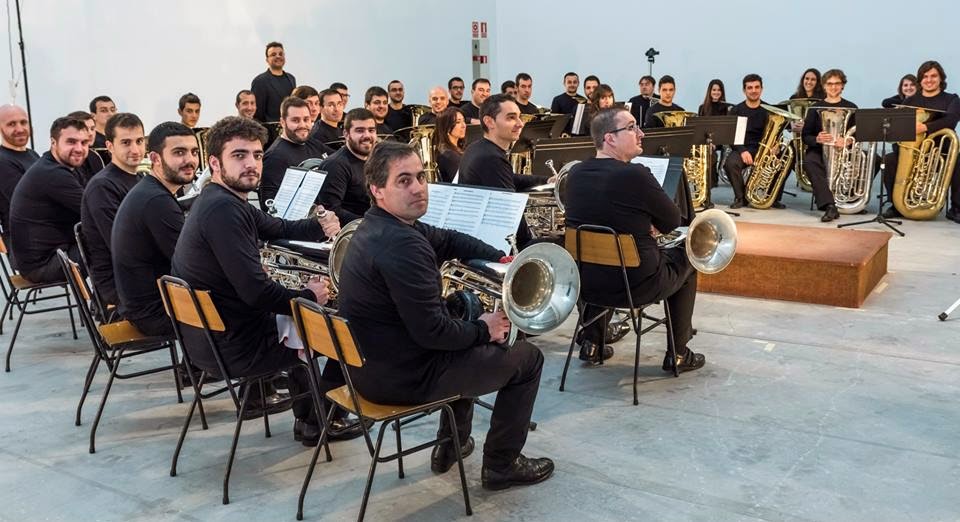
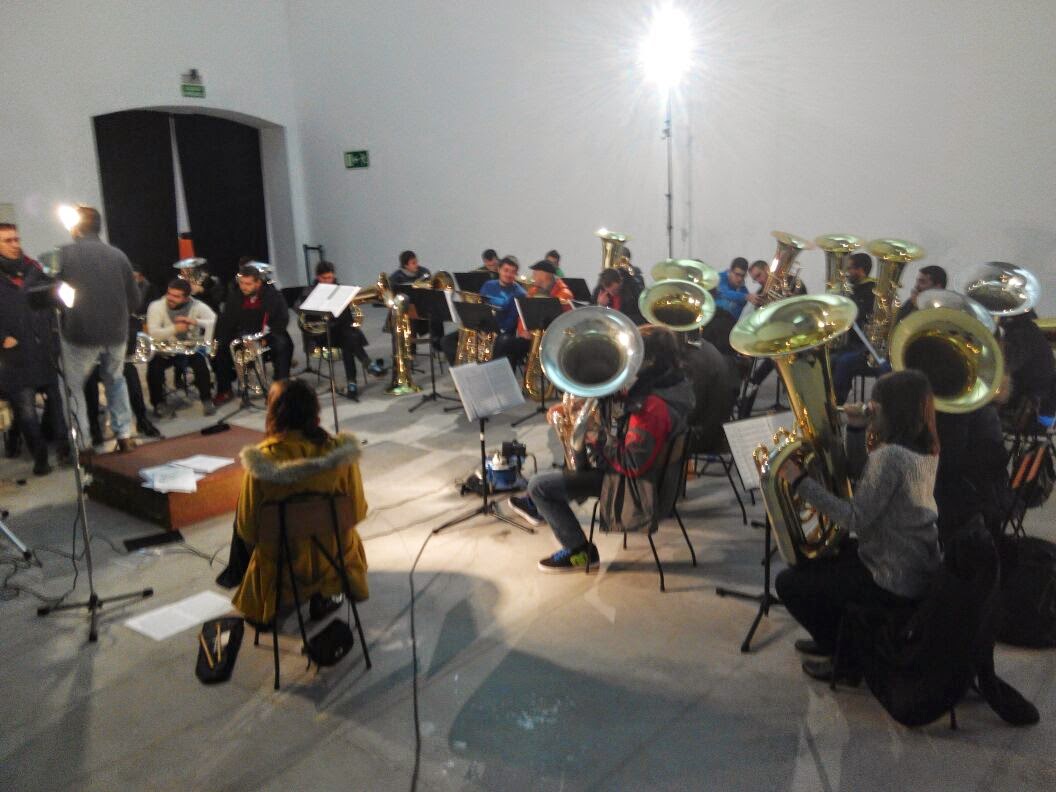
It is not easy to coordinate a group of thirty-four tubas and two
percussionists, coming from different parts of Spain for the occasion, is not
easy to get that LABoral Centro de Arte kindly yield us, thanks largely to the
efforts of David Muñoz, a breathtakingly
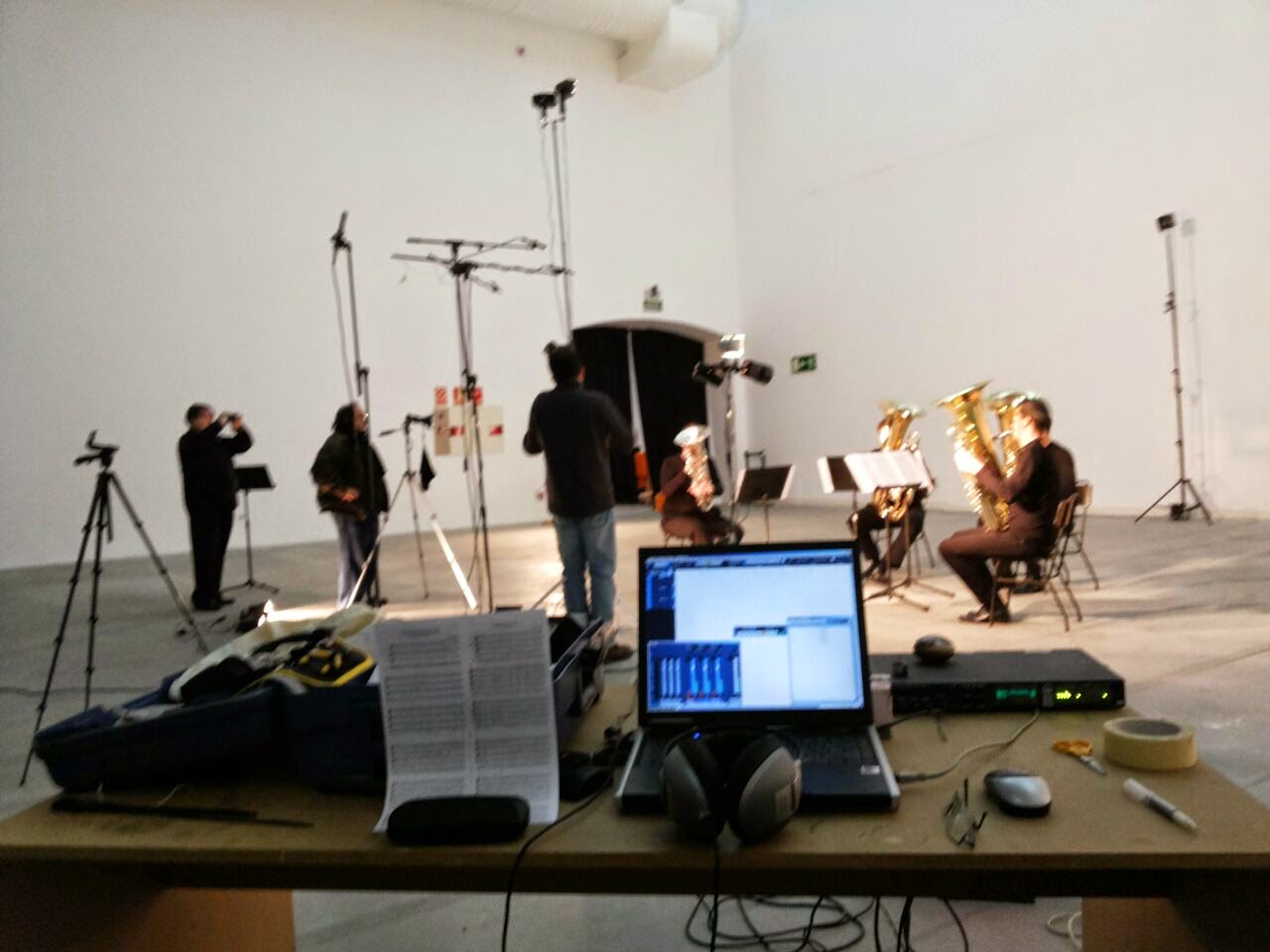
beautiful space, is not easy to have two great professionals like Miguel Ángel
Fernández -in charge of conducting video- and
René de Coupaud sound engineer, both extraordinarily generous sharing
with us their valuable time and expertise. It is not easy, as I say, embarking
on a project of this size, taming a difficult and uncomfortable acoustic for a
group like Keep in Touch Tuba Project, and interpret a wonderful music imagined
by the genius of Henry Purcell (1659-1695 ) for vocals, natural trumpets and
strings.
The challenge was enormous, but the generosity of all who participated
in the project has made possible to end the day back home, tired, rather
exhausted but satisfied. Keep in Touch In Tuba Project, papers and lecterns
spread with extraordinary ease, musicians mingle with different levels so that
all voices be equalized. From Yotuba platform, David Munoz and Hugo Portas,
tireless and effective managing the purchase of shirts, provision of music
stands, chairs, conductors stage and all the small details, seemingly
insignificant but essential, as well as the control of the musicians with the
countless calls and messages that this job entails. Miguel Angel Martin came
with his inseparable camera, and although this time, feeling a bit sick, he
did'nt play, he spent the whole day with us capturing the beauty of teamwork.
Again, a recording of these characteristics is not easy, in fact it is
only possible through the generosity of all who participated in such an
exciting project. Pending the video and audio assembly, I think the result
will be satisfactory ...