jueves, 29 de enero de 2015

Keep in Touch Tuba Project records music by Henry Purcell.

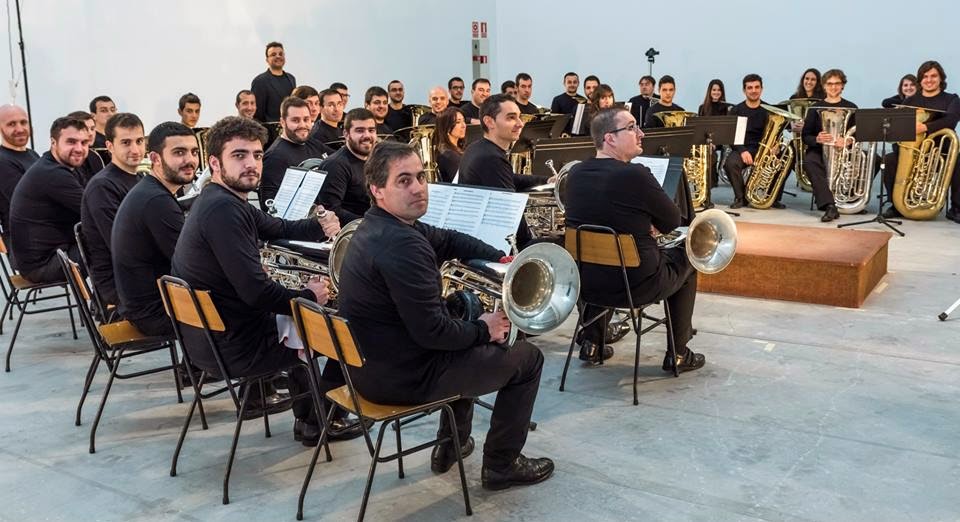
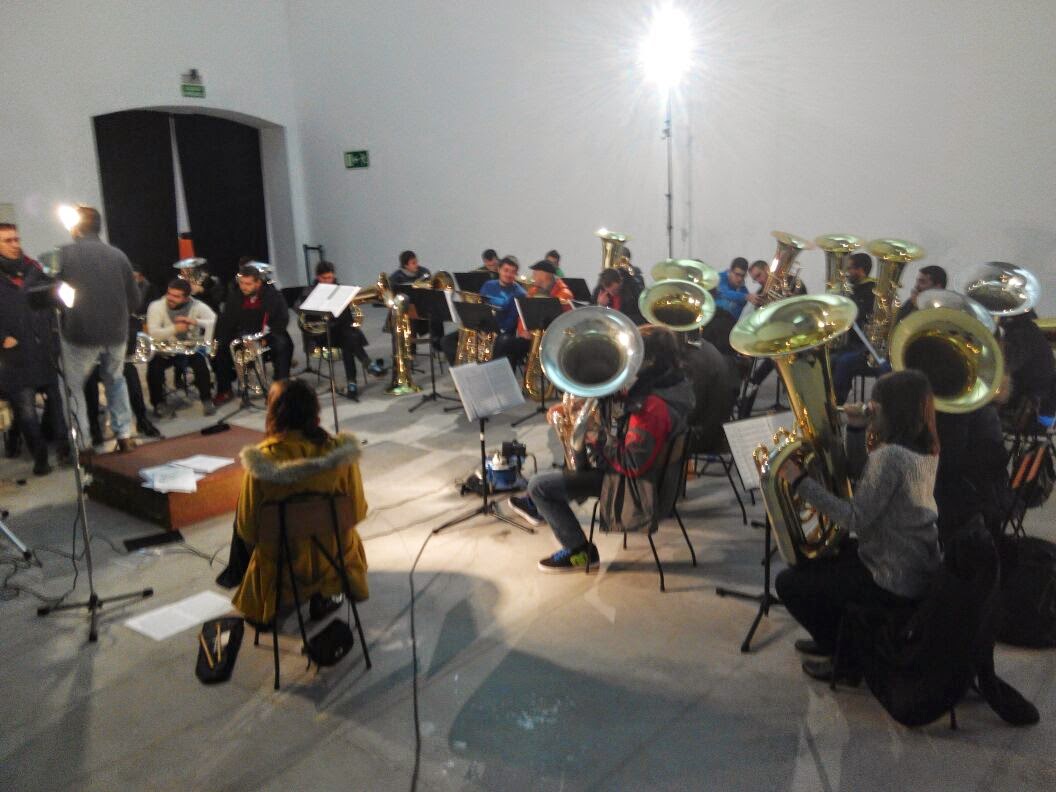
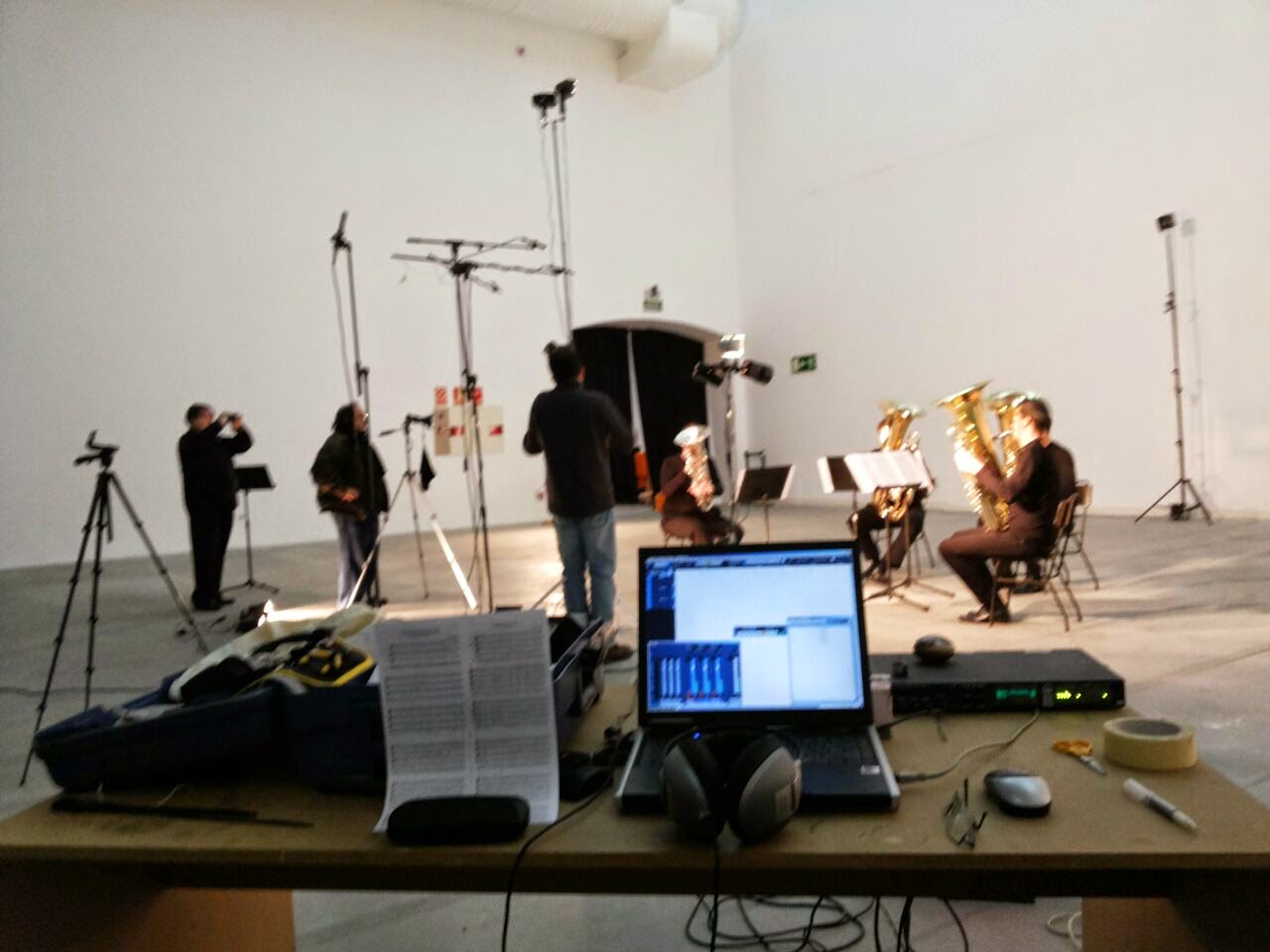
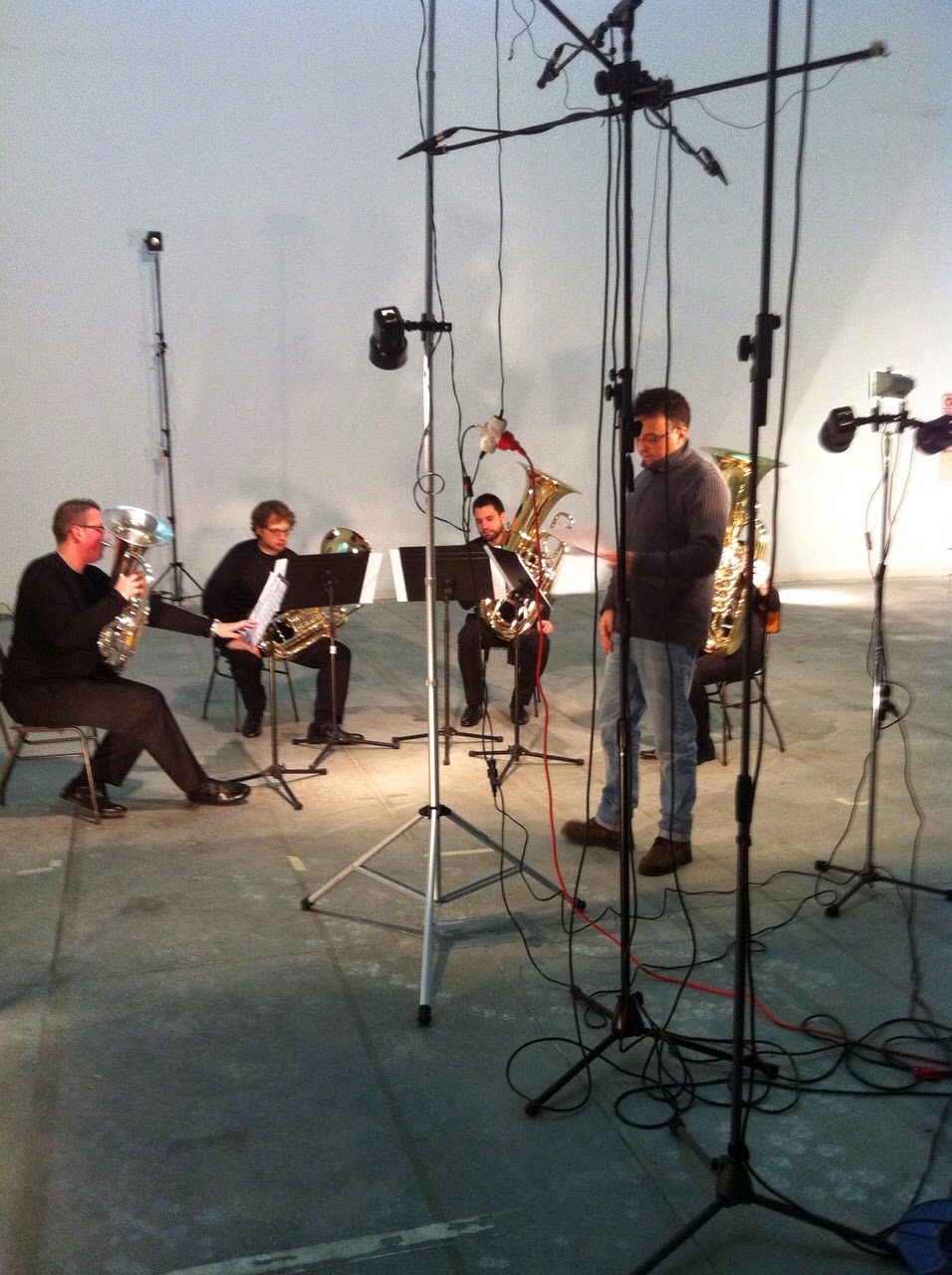
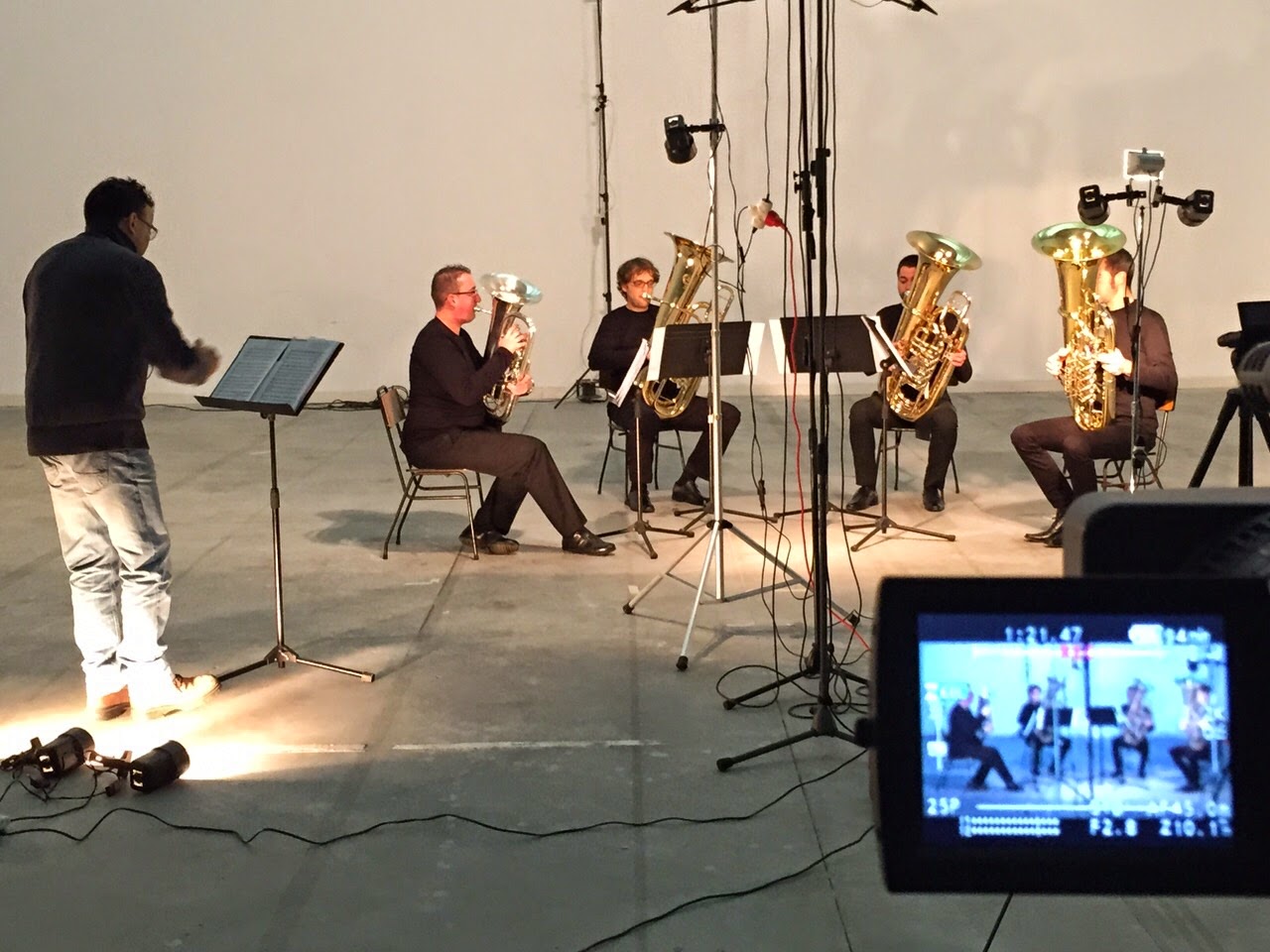
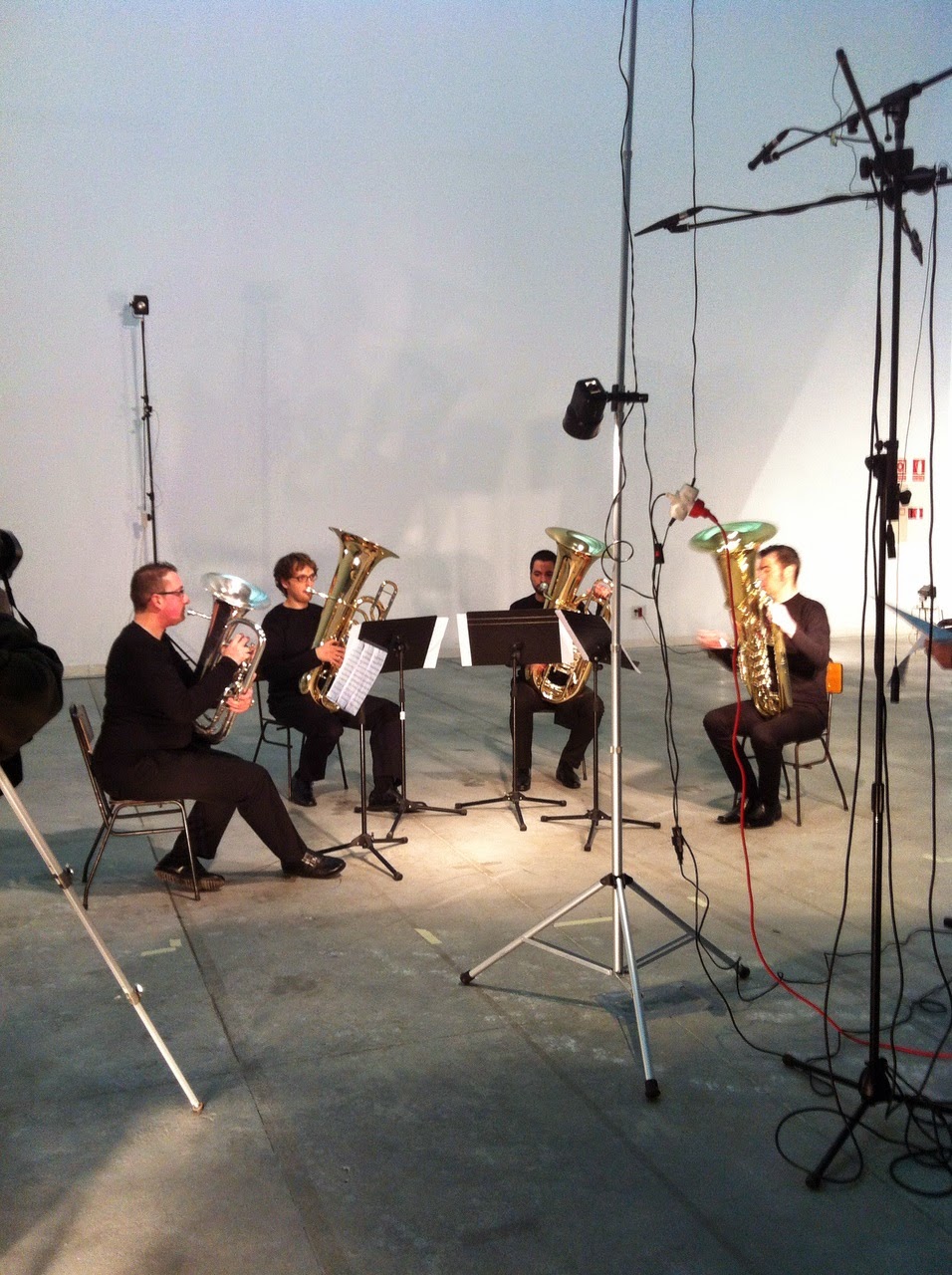
It is not easy to coordinate a group of thirty-four tubas and two percussionists, coming from different parts of Spain for the occasion, is not easy to get that LABoral Centro de Arte kindly yield us, thanks largely to the efforts of David Muñoz, a  breathtakingly beautiful space, is not easy to have two great professionals like Miguel Ángel Fernández -in charge of conducting video- and  René de Coupaud sound engineer, both extraordinarily generous sharing with us their valuable time and expertise. It is not easy, as I say, embarking on a project of this size, taming a difficult and uncomfortable acoustic for a group like Keep in Touch Tuba Project, and interpret a wonderful music imagined by the genius of Henry Purcell (1659-1695 ) for vocals, natural trumpets and strings.
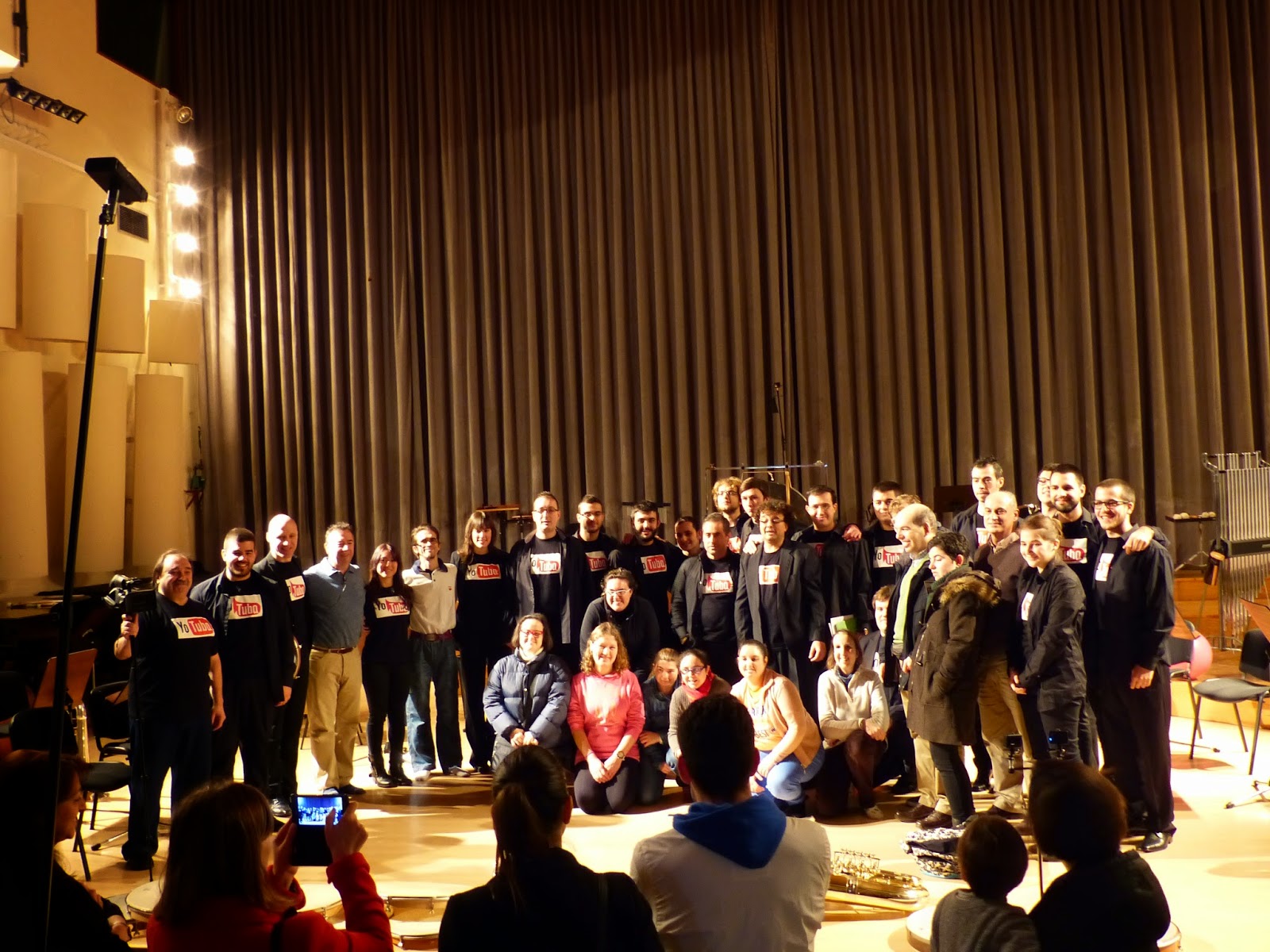
The challenge was enormous, but the generosity of all who participated in the project has made possible to end the day back home, tired, rather exhausted but satisfied. Keep in Touch In Tuba Project, papers and lecterns spread with extraordinary ease, musicians mingle with different levels so that all voices be equalized. From Yotuba platform, David Munoz and Hugo Portas, tireless and effective managing the purchase of shirts, provision of music stands, chairs, conductors stage and all the small details, seemingly insignificant but essential, as well as the control of the musicians with the countless calls and messages that this job entails. Miguel Angel Martin came with his inseparable camera, and although this time, feeling a bit sick, he did'nt play, he spent the whole day with us capturing the beauty of teamwork.

Again, a recording of these characteristics is not easy, in fact it is only possible through the generosity of all who participated in such an exciting project. Pending the video and audio assembly, I think the result will be satisfactory ...
Thank you very much to everyone ....

Alfonso


Keep in Touch Tuba Project recording music by Henry Purcell.

No es fácil coordinar a un grupo de treinta y cuatro tubas y dos percusionistas, venidos de diferentes puntos de España expresamente para la ocasión, no es fácil conseguir que LABoral Centro de Arte nos ceda, gracias principalmente a las gestiones de David Muñoz, un espacio sobrecogedoramente hermoso, no es fácil disponer de dos magníficos profesionales como Miguel Ángel Fernández ―encargado de la realización de vídeo— y René de Coupaud ―ingeniero de sonido—, extraordinariamente generosos compartiendo con nosotros su valioso tiempo y su maestría. No es fácil, como digo, embarcarse en un proyecto de estas dimensiones, domar una acústica difícil e incómoda para una agrupación de las características de Keep in Touch Tuba Project, e interpretar una música maravillosa imaginada por el genio de Henry Purcell (1659-1695) para voces, trompetas naturales y cuerdas.
El reto era mayúsculo, sin embargo, la generosidad de todos cuantos han participado en el proyecto ha hecho posible que al final del día regresemos a casa, cansados, más bien exhaustos, pero satisfechos. En Keep in Touch Tuba Project, los papeles y los atriles se reparten con extraordinaria facilidad, músicos de diferentes niveles se mezclan con el fin de que todas las voces estén igualadas. Desde la plataforma Yotuba, David Muñoz y Hugo Portas, incansables y eficaces gestionan la compra de camisetas, la provisión de los atriles, las sillas, la tarima y todo un sinfín de pequeños detalles aparentemente insignificantes pero imprescindibles para la realización de la meta propuesta, además del control de la plantilla con las innumerables llamadas y mensajes que dicha tarea conlleva. Miguel Ángel Martín viene con su inseparable cámara de fotos, y a pesar de que esta vez, por encontrarse ligeramente indispuesto, no toca, pasa el día entero con nosotros capturando la belleza del trabajo en equipo.
Insisto, una grabación de éstas características no es fácil, en realidad solo es posible gracias a la generosidad de todos los que participaron en este proyecto tan ilusionante. A la espera del montaje de vídeo y audio, creo que el resultado será satisfactorio…
Muchas gracias a todos….
Alfonso


sábado, 20 de diciembre de 2014

INNER MUSIC. Music on your skin.

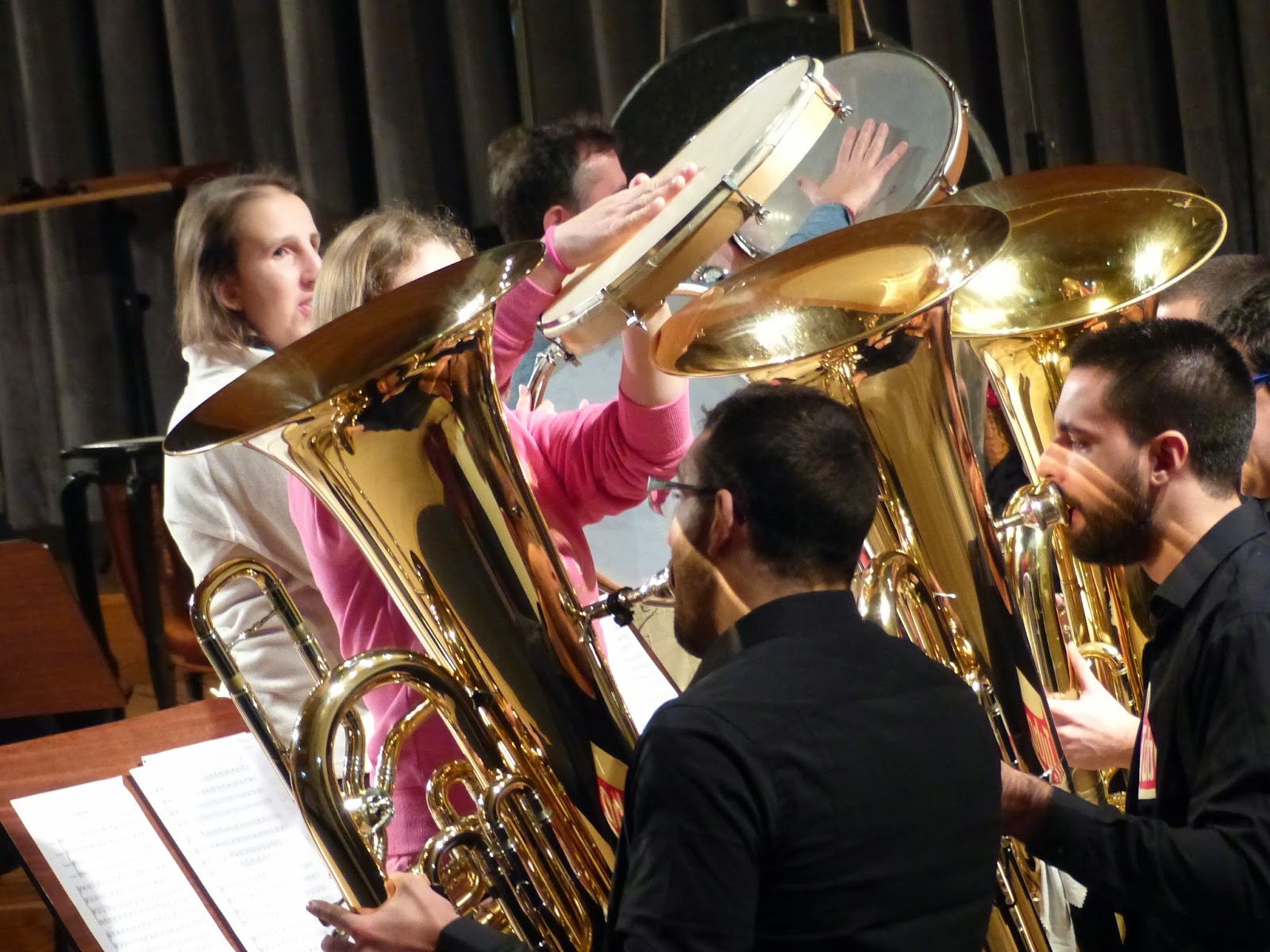
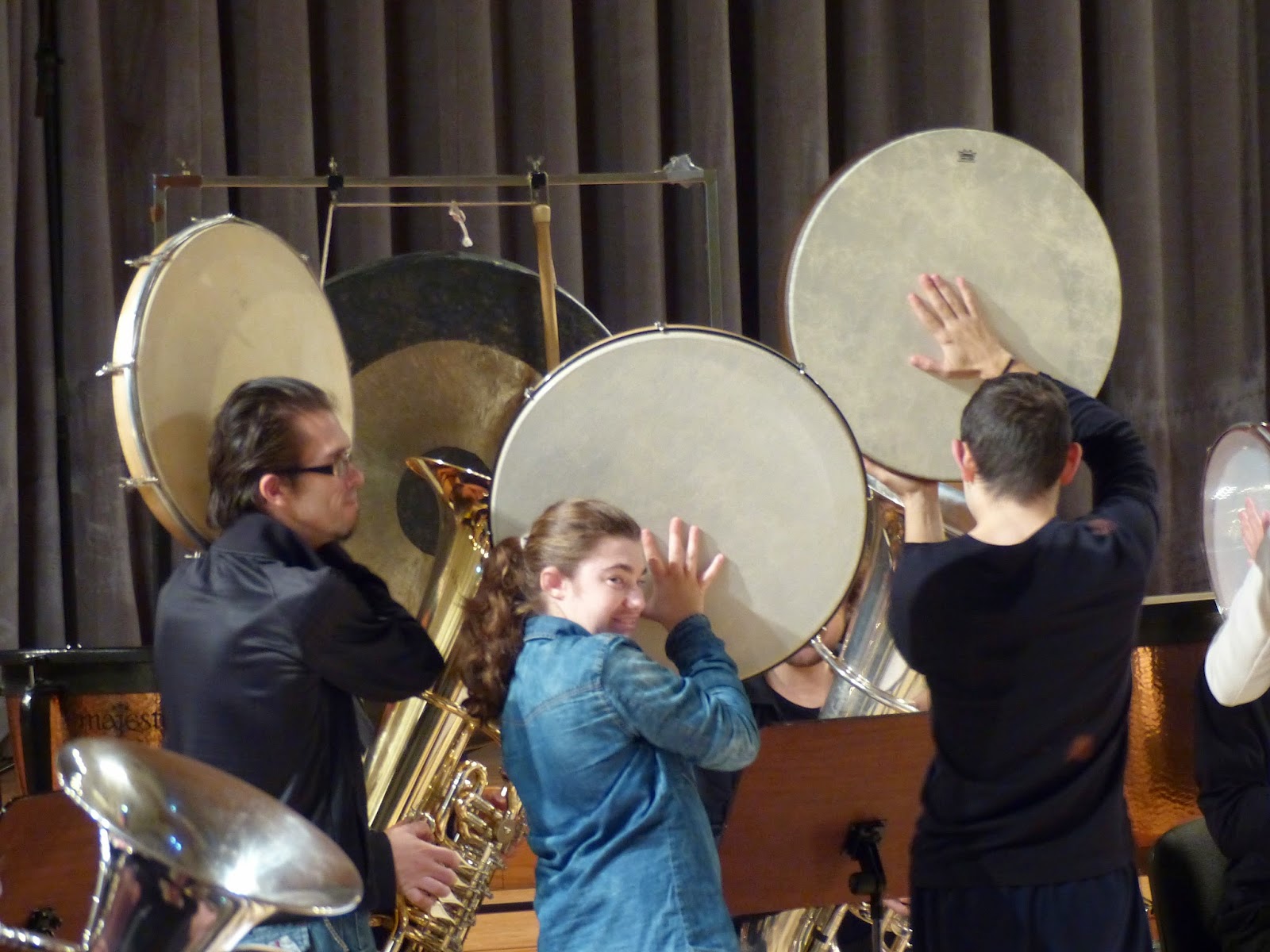
Last december 11, 2014, the tuba classroom of CONSMUPA had the opportunity to collaborate on a certainly special concert addressed to a small audience of people with varying degrees of hearing impairment. Accepting the invitation of René de Coupaud, Miguel Ángel Fernández and Patxi del Campo, and following his wise counsels, the members of the CONSMUPA's tuba studio, with the collaboration of Keep in Touch Tuba Project, participated in the design of a concert that, given the special caracteristics of the public it was addressed, should contain an important visual and rhythmic content.
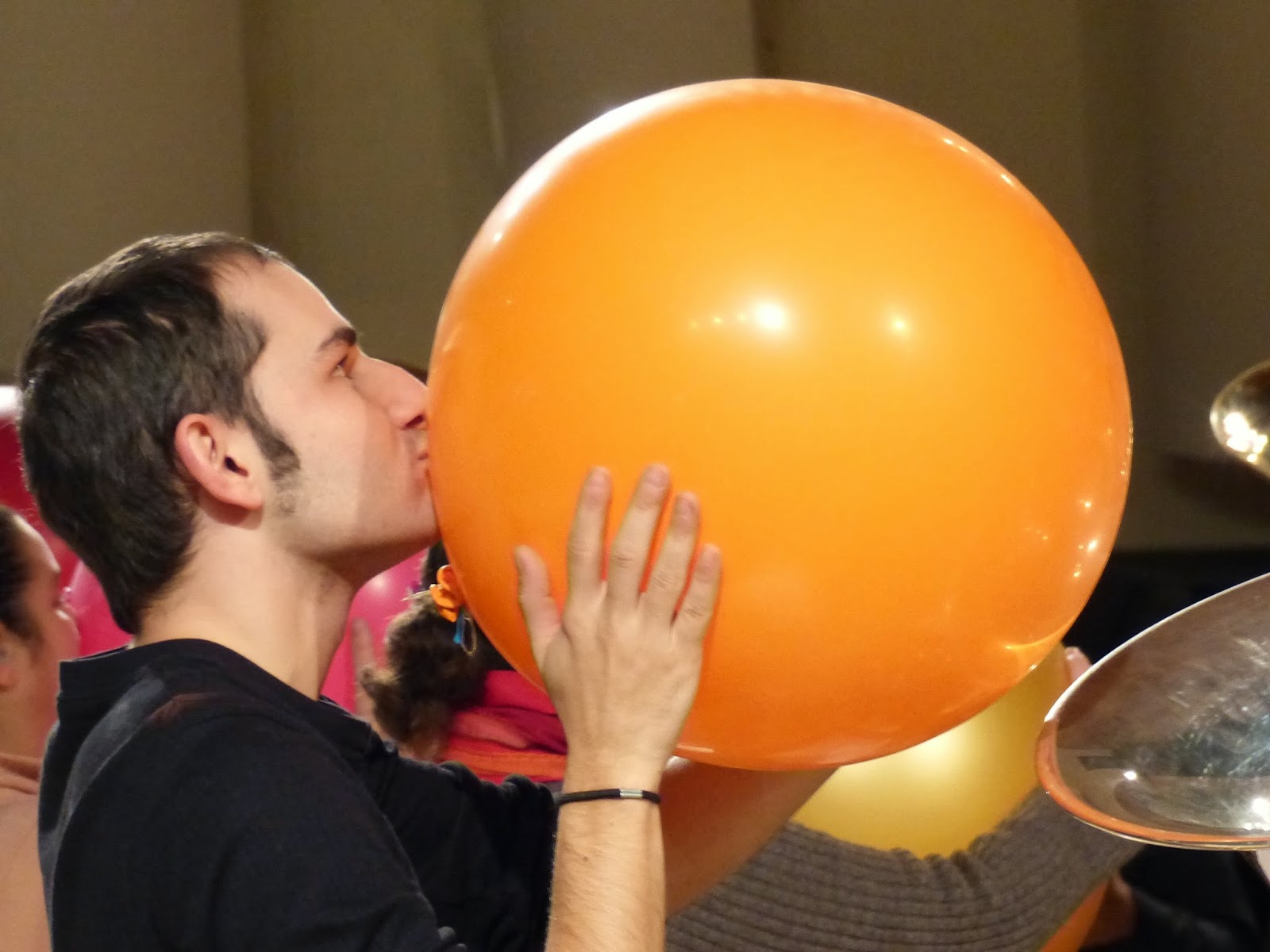
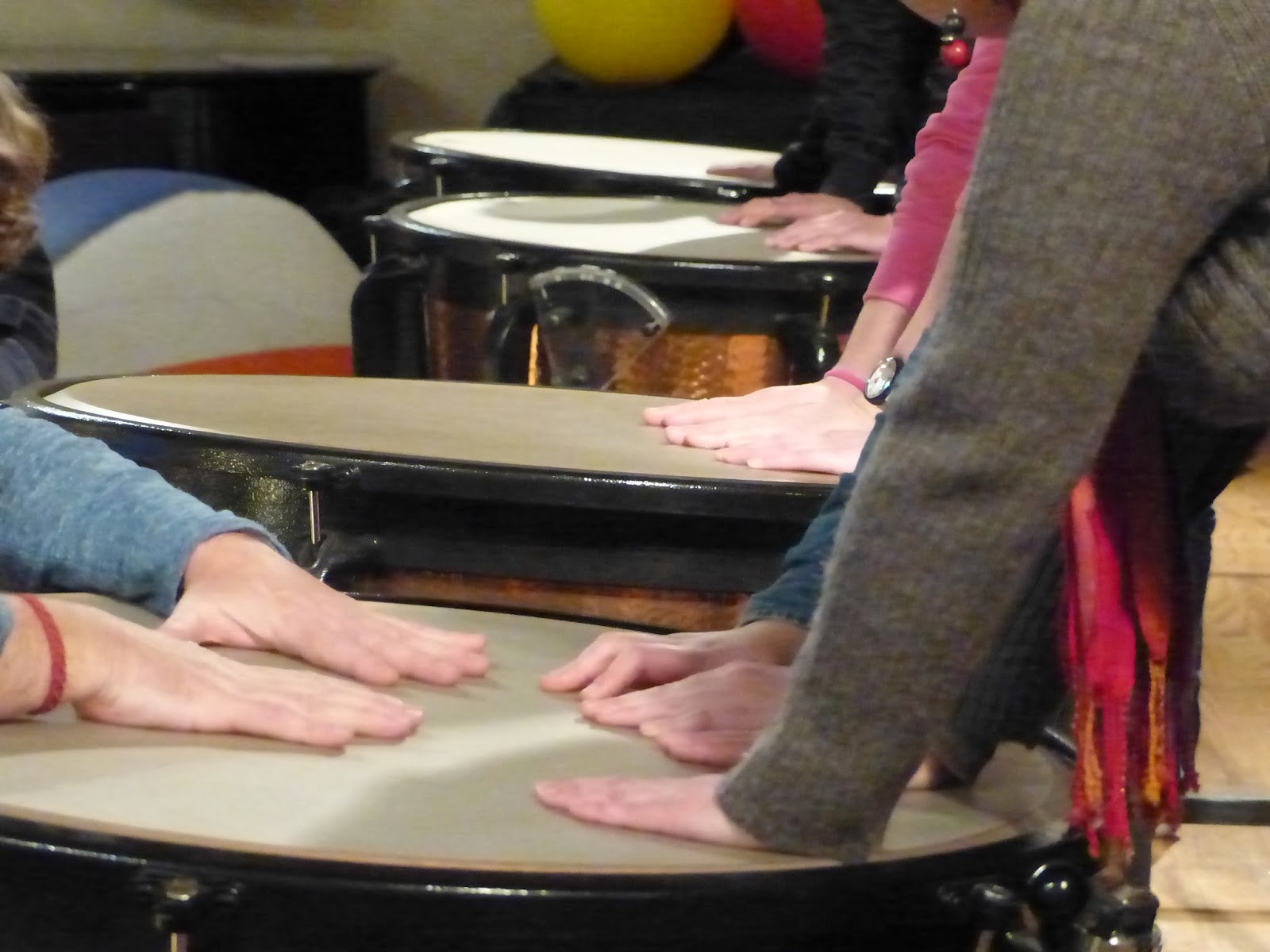
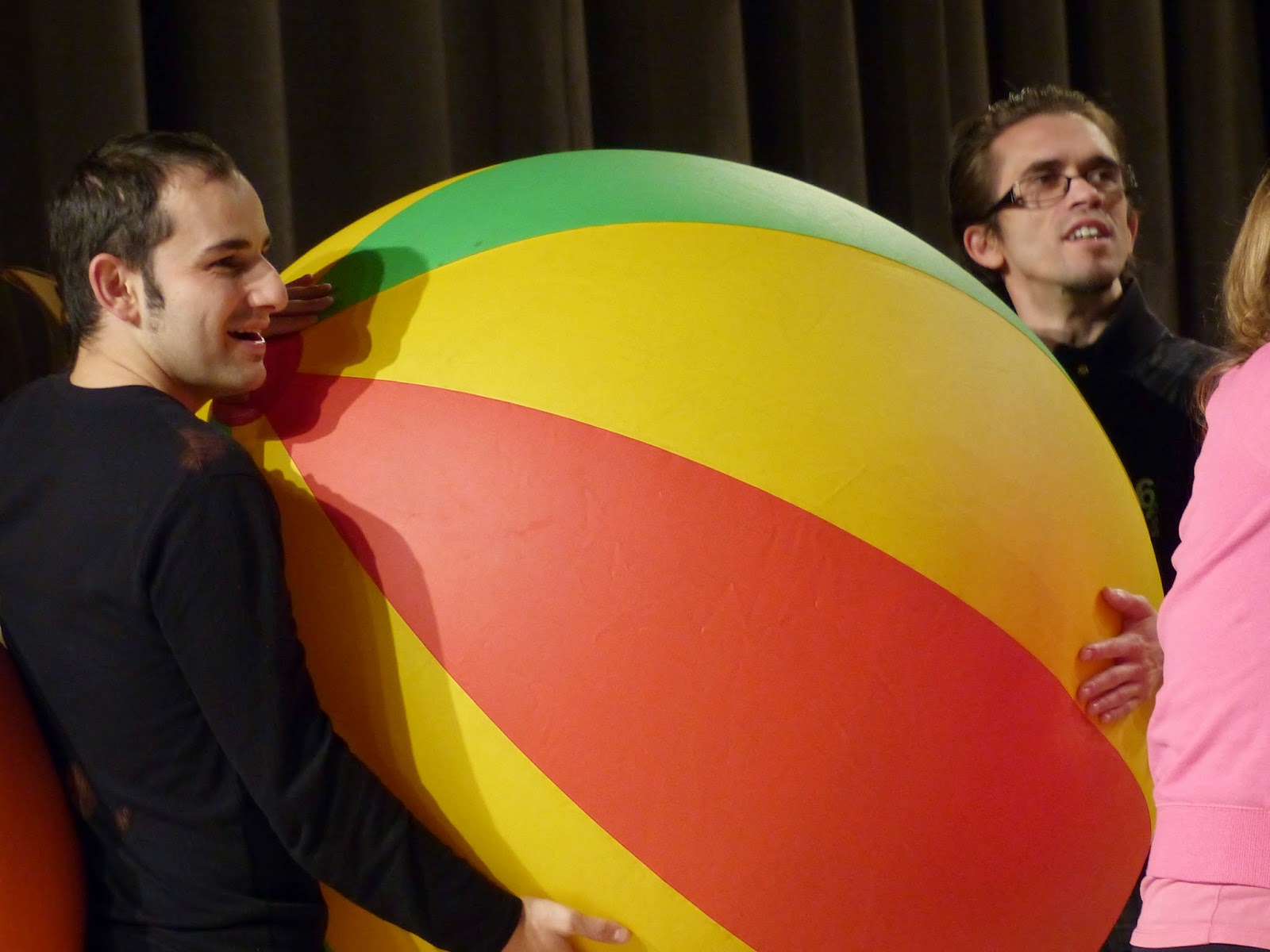
In order to provide mechanisms to feel the vibrations, Patxi del Campo brought balloons, beach balls and tambourines of different sizes that, with the instruments of the performers themselves, helped the audience to feel the music through vibrations. At suggestion of Patxi, the concert became a modest tribute to Roberto Reccia, recently died in Buenos Aires, which was one of the pioneers of music therapy applied to people with hearing disabilities. 
Exerting as presenter and master of ceremonies, Patxi del Campo explained, with the aid of the sign language interpreters Lara Alonso and Susana Ordás, to the attendees and the general public in what would consist each piece and what could they use to feel it. I'm convinced, without fear of being wrong, that all who participated in the concert greatly enjoyed the experience, in which the music, this abstract language that emerges from the many and varied vibrations generated by the instruments of the ensemble, exercised its immense power to thrill.

INNER MUSIC: Music on your skin, is a collaboration between IMAP, Taller de Músicos de la Fundación Municipal de Cultura de Gijón, the Fundación Padre Vinjoy, YoTuba and the CONSMUPA. From the Tuba classroom of the CONSMUPA and Keep in Touch Tuba Project we can only strongly thank to all that were involved in the event for allowing us to participate.

Sincerely... thanks

INNER MUSIC
Músic on your skin

The Queens Funeral March                                         Henry Purcell (Arr. Alfonso Mollá)
Canzona                                                                          Henry Purcell (Arr. Alfonso Mollá)
Dies Irae                                                                          Arr. Alfonso Mollá
Pavane                                                                            Henry Purcell (Arr. Alfonso Mollá)
The Queens Funeral March                                         Henry Purcell (Arr. Alfonso Mollá)
Bis: Dies Irae.

Presenta: Patxi del Campo San Vicente.
Sonido de Patxi del Campo y Fotografía: René de Coupaud Villarubia.
Realización: Miguel Ángel Fernández Gutiérrez.
Coordinadoras desde la Fundación Padre Vinjoy: Aurora Logedo y Marta Maseda.

Colaboran:


Ensemble de Tubas del CONSMUPA + Keep in Touch Tuba Project
Bombardinos:
Rubén Costa, Davíd Lavía, Fran Villamor, Luis Busto.
Tubas:
Hugo Portas, David Muñoz, Manuel Alejandro López, Rubén Carro, Alfredo Viceiro, Nicolás Portas, Pablo Santaclara, Nuria Inguanzo, Sergi Vañó, Abel Fernández, Ismael Cenador, Patrikas Kisunas.
Percusión:
Vanesa Menéndez, María Cuadriello.
Director:
Alfonso Mollá.


INNER MUSIC: Música a flor de piel.

El pasado 11 de diciembre de 2014, el Aula de Tuba del CONSMUPA tuvo la oportunidad de colaborar en un concierto ciertamente especial dirigido a un público reducido formado por personas con diferentes grados de discapacidad auditiva. Aceptando la invitación de René de Coupaud, Miguel Ángel Fernández y Patxi del Campo, y siguiendo sus sabios consejos, el Aula de Tuba del CONSMUPA, con la colaboración de Keep in TouchTuba Project, participó en el diseño de un concierto que, dadas las características especiales del público al que estaba dirigido, debía contener un importante contenido visual y rítmico. Con el fin de proporcionar mecanismos para sentir las vibraciones, Patxi del Campo trajo globos, balones de playa y panderos de diferentes tamaños que, junto a los propios instrumentos de los intérpretes, permitieron al público sentir la música a través de las vibraciones. A sugerencia de Patxi, el concierto se convirtió en un modesto homenaje a Roberto Reccia, fallecido recientemente en Buenos Aires, que fue uno de los precursores de la musicoterapia aplicada a las personas con discapacidad auditiva.
Ejerciendo de presentador y maestro de ceremonias, Patxi del Campo explicaba, con la colaboración de las traductoras del lenguaje de signos Lara Alonso y Susana Ordás, a los asistentes y al público en general en qué iba a consistir cada pieza y que podían utilizar para sentirla. Creo, sin temor a equivocarme, que todos los que participamos en el concierto disfrutamos enormemente con la experiencia, en la que la música, ese lenguaje abstracto que surge de las numerosas y variadas vibraciones generadas por los instrumentos del ensemble, ejerció su inmenso poder para emocionar.

INNER MUSIC: Música a flor de piel surge de la colaboración entre el IMAP, el Taller de Músicos de la Fundación Municipal de Cultura de Gijón, la Fundación Padre Vinjoy, la plataforma YoTuba y el CONSMUPA. Desde el Aula de Tuba del CONSMUPA y el Ensemble Keep in Touch Tuba Project solo nos queda agradecer a todos los implicados que nos hayan permitido participar en el proyecto.
Sinceramente… gracias….

INNER MUSIC
Música a flor de piel
The Queens Funeral March                                        Henry Purcell (Arr. Alfonso Mollá)
Canzona                                                                        Henry Purcell (Arr. Alfonso Mollá)
Dies Irae                                                                        Arr. Alfonso Mollá
Pavane                                                                           Henry Purcell (Arr. Alfonso Mollá)
The Queens Funeral March                                        Henry Purcell (Arr. Alfonso Mollá)
Encore piece: Dies Irae.

Presenta: Patxi del Campo San Vicente.
Sonido de Patxi del Campo y Fotografía: René de Coupaud Villarubia.
Realización: Miguel Ángel Fernández Gutiérrez.
Coordinadoras desde la Fundación Padre Vinjoy: Aurora Logedo y Marta Maseda.

Colaboran:


Ensemble de Tubas del CONSMUPA + Keep in TouchTuba Project
Bombardinos:
Rubén Costa, Davíd Lavía, Fran Villamor, Luis Busto.
Tubas:
Hugo Portas, David Muñoz, Manuel Alejandro López, Rubén Carro, Alfredo Viceiro, Nicolás Portas, Pablo Santaclara, Nuria Inguanzo, Sergi Vañó, Abel Fernández, Ismael Cenador, Patrikas Kisunas.
Percusión:
Vanesa Menéndez, María Cuadriello.
Director:
Alfonso Mollá.

                        
                               Siguiendo este enlace encontraréis la entrevista completa.


 Fotos: René de Coupaud.

domingo, 16 de noviembre de 2014

Michel Godard, a music master in Asturias (Spain).

Somehow, I came to music through jazz, through the admiration towards musicians like Charlie Parker, Louis Armstrong, Oscar Peterson, Duke Ellington, Chick Corea, Keith Jarrett, Miles Davis and a host of great artists who were marking my musical tastes by means of the recordings that were falling in my hands, artists that put their undeniable, and sometimes overwhelming, technical mastery of the instrument at the service of music.
The tuba was part of the jazz history from its beginnings, although initially its role was limited to the rhythmic and harmonic support of the accompanying soloists. During the second half of the twentieth century, the technical capabilities of the tuba players  evolved radically allowing it to be a soloist on different occasions. Bill Barber, Don Butterfield, Ray Draper, Dave Bargeron, Jon Sass, Bob Stewart, and, of course, Michel Godard are some of the artists who were responsible for strengthening the role of the tuba soloist in jazz.
Throughout his long career, Michel Godard has managed to square the circle: to evolve without losing its unique musical personality, to explore different aesthetics keeping intact and recognizable his voice . His extraordinary creativity and chameleonic adaptability have allowed him to collaborate with numerous artists in various projects that deserve our attention and admiration.
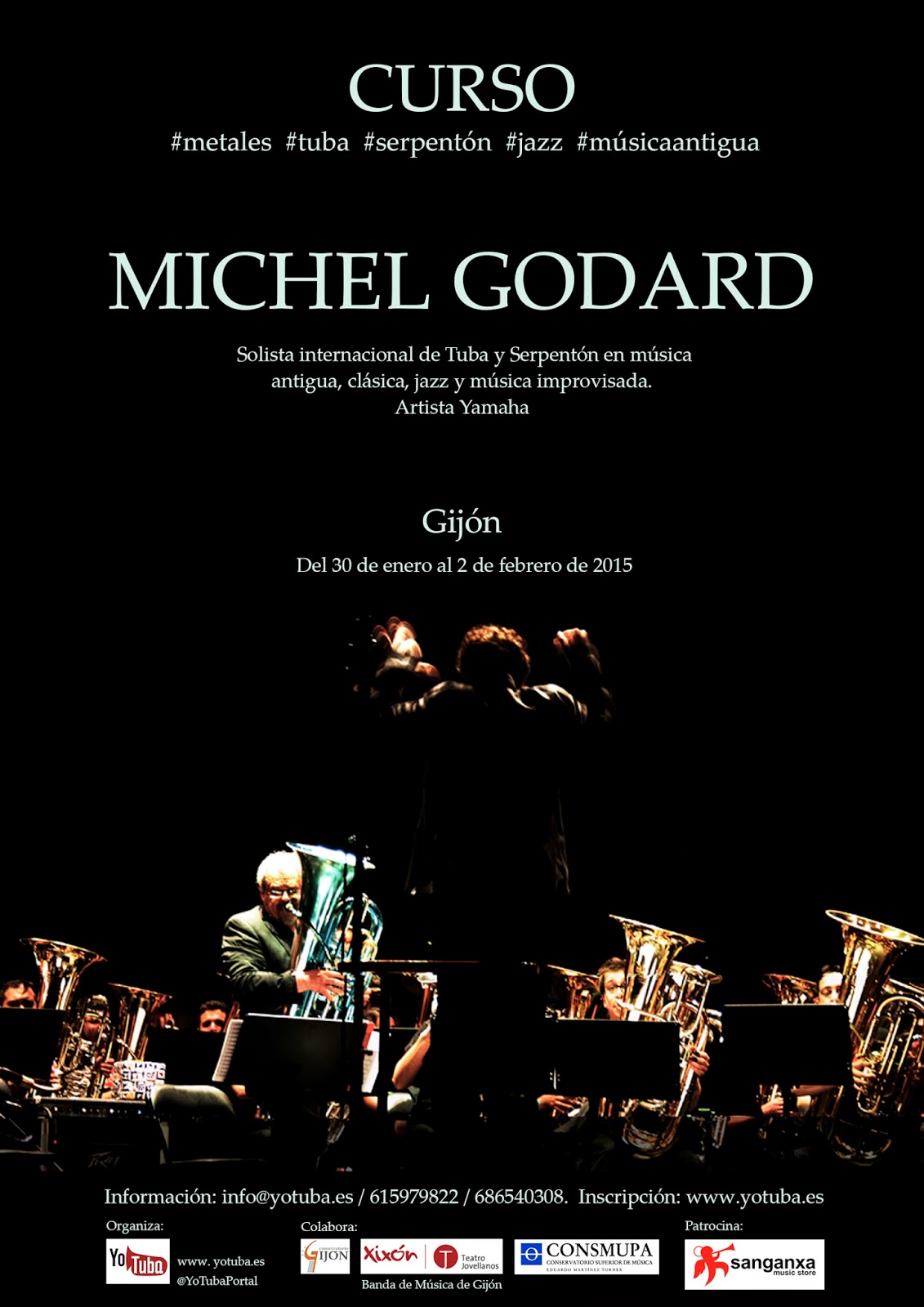
Michel Godard will be in Asturias (Spain) from 30 January to 2 February to give a Masterclass on tuba and serpent playing, in which he will share with us his profound musical knowledge. If you want to come, you have all the information about the course here.


En cierto modo, llegué a la música a través del jazz, de la admiración por músicos como Charlie Parker, Louis Armstrong, Oscar Peterson, Duke Ellington, Chick Corea, Keith Jarret, Miles Davis y un sinfín de grandes artistas que fueron marcando mis gustos musicales a través de las grabaciones que iban cayendo en mis manos, artistas que pusieron un innegable, y en algunos casos abrumador, dominio técnico del instrumento al servicio de la música.
La tuba formó parte de la historia del jazz desde sus inicios, si bien al principio su función se limitaba al sustento rítmico y armónico de los solistas a los que acompañaba. Durante la segunda mitad del S. XX, las capacidades técnicas de los tubistas evolucionaron radicalmente permitiéndole asumir el liderazgo en numerosas ocasiones. Bill Barber, Don Butterfield, Ray Drapper, Dave Bargeron, Jon Sass, Bob Stewart, y, como no, Michel Godard son algunos de los artistas que se encargaron de afianzar el papel solista de la tuba en el Jazz.
A lo largo de su dilatada carrera, Michel Godard ha conseguido la cuadratura del círculo: evolucionar sin perder un ápice de su extraordinaria personalidad musical, explorar diferentes estéticas manteniendo intacta y reconocible su propia voz. Su extraordinaria creatividad y su camaleónica capacidad de adaptación le han permitido colaborar con innumerables artistas en diversos proyectos que bien merecen nuestra atención y admiración.
Michel Godard estará en Asturias (España) desde el 30 de enero al 2 de febrero para impartir un curso de tuba y serpentón en el que compartirá con nosotros su profundo bagaje musical. Si os animáis tenéis toda la información del curso aquí.

sábado, 5 de julio de 2014

Parable XXII for Solo Tuba. Vincent Persichetti. Tuba: Isaac Rodríguez Cotrofe.

Vincent Ludwig Persichetti (Philadelphia, June 6, 1915-Philadelphia, August 14, 1987). Written in 1981, the Parable XXII for Solo Tuba is a very interesting piece that combines technical difficulty with endless emotions that arise from the staff.

Vincent Ludwig Persichetti (Filadelfia, 6 de junio de 1915-Filadelfia, 14 de agosto de 1987). Escrita en 1981, la Parábola XXII para tuba es una obra sumamente interesante que aúna dificultad técnica con un sinfín de emociones que van surgiendo del pentagrama.


Tuba: Isaac Rodríguez Cotrofe. 
Dirección musical/conductor: Alfonso Mollá Castells.
Coordinador del proyecto/ Project coordinator: David Muñoz Velázquez. 
Sonido/Sound: René de Coupaud Villarubia. 
Filming direction/Realización: Miguel Ángel Fernández Gutiérrez. 
Maquillaje/Make up: Olga Fernández Suárez.

Grabado el 25 de enero de 2014 en la Iglesia de Laboral Ciudad de la Cultura, Gijón (España). 
Recorded on January 25, 2014 in the Church of Laboral City of Culture, Gijon (Spain).

martes, 1 de julio de 2014

Giacinto Scelsi. Maknongan.

    Maknongan for low instrument (tuba, contrabassoon, bass or contrabass saxophone, flute octobasse, string bass, etc ...) or low voice. Written by Giacinto Scelsi (La Spezia, January 8, 1905-Rome, August 9, 1988), Italian composer that also wrote poems in French language. His most characteristic musical works are mainly based on a single note, altered by treatment of its harmonics and through microtonal, timbre, dynamic, volume, density, tempo or octave inflections. Giacinto Scelsi was the forerunner of spectralism that is mainly based on the discovery of the nature of musical timbre and spectral decomposition of musical sound, the origin of the perception of timbre.

     Maknongan, para un instrumento grave (tuba, contrafagot, saxofón bajo o contrabajo, flauta octobasse, contrabajo, etc…) o voz grave. 1976. Escrita por Giacinto Scelsi (La Spezia, 8 de enero de 1905—Roma, 9 de agosto de 1988), compositor italiano y poeta en lengua francesa. Sus obras musicales más características se basan fundamentalmente en una sola nota, alterada por el tratamiento de sus armónicos y por medio de inflexiones microtonales, tímbricas, dinámicas, de volumen, de densidad, de tempo o de octava. Giacinto Scelsi fue el precursor del espectralismo que se basa principalmente en el descubrimiento de la naturaleza del timbre musical y en la descomposición espectral del sonido musical, en el origen de la percepción del timbre.


Tuba: Isaac Rodríguez Cotrofe. 
Dirección musical/conductor: Alfonso Mollá Castells.
Coordinador del proyecto/ Project coordinator: David Muñoz Velázquez. 
Sonido/Sound: René de Coupaud Villarubia. 
Realización/Filming direction: Miguel Ángel Fernández Gutiérrez. 
Maquillaje/Make up: Olga Fernández Suárez.

Grabado el 25 de enero de 2014 en la Iglesia de Laboral Ciudad de la Cultura, Gijón (España). 
Recorded on January 25, 2014 in the Church of Laboral City of Culture, Gijon (Spain).